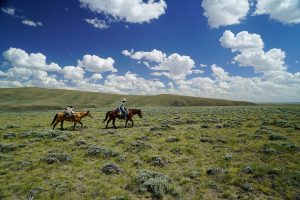
This Patient Rider Spent Months Retracing the Pony Express on Horseback
HistoryNet historynet.com
Listen to this summary
When the Central Overland California and Pikes Peak Express Co. launched the Pony Express on April 3, 1860, fanfare for the new express mail service made newspaper headlines from New York to San Francisco. The cheers came loudest from California where proponents hailed its commencement as a vital step forward in linking the Far West with the rest of the country. The advertised delivery time between St. Joseph, Mo., and Sacramento, Calif. was 10 days, accomplished by a fast-horse relay. Way stations spaced 10 to 20 miles apart provided couriers with fresh horses, enabling them to carry the mail across the West at the speed of a galloping horse. And that’s nearly the way it shook out.
The Pony Express was the greatest display of American horsemanship ever to color the pages of a history book, but it was short-lived. Each of the nearly 190 stations had to be stocked with horses, provisions and stock tenders. Fifteen of the stations had no viable water source; water for the horses and the men looking after them had to be hauled in by mule-drawn wagons. The mail ran twice weekly, both eastbound and westbound, and after a year in operation it was eating up $5 for every $1 that it earned. It was prohibitively expensive, and on Oct. 26, 1861, the Pony Express hung up its spurs. But it cast a long shadow. As author William Banning wrote about that era in his 1928 book Six…
More ways to use this
Open on another device

Scan to open this page. Your saved notes and account access are not included.
 2014 Chevrolet Express 2500 Explorer Limited SE Conversion Van
 E-motorbike rider faces trial over death of nurse