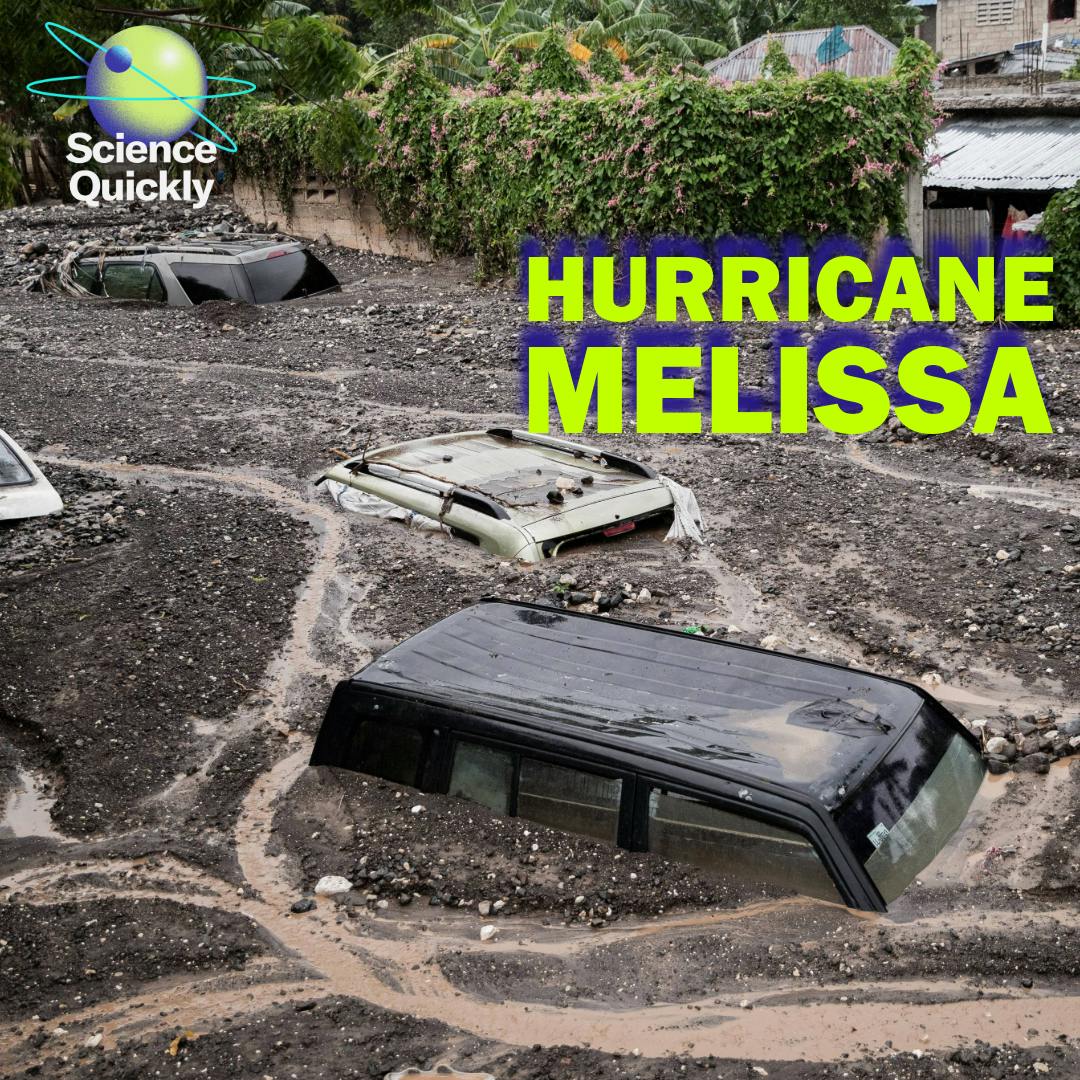
How Hurricane Melissa Became a Meteorologic Outlier
60-Second Science sciam.com
This is what was read here when it was published. Scientific American no longer carries it in what it publishes now.
Hurricane Melissa stunned meteorologists with its rare intensity, reaching wind speeds that are more typical of Pacific supertyphoons and maintaining Category 5 strength for more than 24 hours. Scientific American senior editor Andrea Thompson breaks down what made the storm so unusual, how it impacted Jamaica and Haiti and what it might signal about the future of hurricanes. Plus, we discuss quick updates on viral infections and heart health, black hole collisions and chimpanzee rationality.
Hurricane Melissa Images Reveal a Monster Storm for the Record Books
More ways to use this
Open on another device

Scan to open this page. Your saved notes and account access are not included.